Paving and tiling outdoor spaces is a popular way to enhance patios, pathways, and garden areas. However, when the weather turns colder — or wetter — many homeowners, landscaping and paving contractors are left wondering: can you tile or pave outside in cold or rainy weather?

The good news is that it is possible. The key is understanding how temperature, frost, snow and rainfall affect paving bedding mortar, primer and grouts, as well as curing times — and knowing when to push on and when to wait.
This practical guide explains when outdoor paving is safe in cold or wet conditions, which products perform best, and when it’s better to delay work to avoid costly failures later on.
Should You Work in Cold Temperatures?
Temperature is one of the most important factors in outdoor tiling and paving. Very low or freezing temperatures should always stop work. However, stopping completely throughout winter isn’t always practical.
If temperatures consistently fall below the minimum requirements of your chosen materials, delaying the project is the safest option. Attempting to tile or joint paving slabs in extreme cold can result in poor adhesion, patchy finishes and expensive repairs later on.
Where possible, waiting for milder conditions — or using products design3ed for colder weather alongside suitable protection – can save time, money and frustration in the long run.
Can You Tile Outside in Cold Weather?
Yes, you can tile outside in cold weather, but careful planning is essential. Cold temperatures slow down the curing process of tile adhesives and grouts, which can compromise bond strength if materials don’t set correctly.
To tile successfully in colder conditions:
- Always follow manufacturer temperature guidelines
- Use adhesives and grouts formulated for low temperatures
- Ensure temperatures remain stable during installation and curing – usually 5ºC and rising
Most products require temperatures to stay above their minimum working range for 24–48 hours after installation.
What Is the Minimum Temperature for Outdoor Paving?
Most tile adhesives and paving grouts require temperatures above 5°C (41°F) to cure properly. While work may seem possible just above freezing, curing times will be much longer.
Below this temperature:
- Adhesives and grouts take significantly longer to set
- Near or below 0°C (32°F), curing can stop entirely
Always check the product datasheet before starting work, and remember that ground temperature is often several degrees colder than the air temperature shown on weather apps.
Pointing a Patio in Cold Weather
Pointing patios in cold weather requires particular care. Along with rain (covered below) and hot weather, cold snaps and frost can seriously affect grout performance if the right precautions aren’t taken.
Frozen Ground and Frost
As a rule, never grout when the ground is frozen. If there is visible frost on the surface, it is simply too cold to point.
Frozen ground can release additional moisture as it thaws, adding extra water to the grout mix. This excess moisture is one of the main causes of efflorescence staining later on (another common cause is insufficient priming of the paving).
Minimum Temperatures for Pointing
Most grouting products have a minimum working temperature of around 5°C — and rising. These limits are there for good reason and should always be followed.
While hot-weather pointing is best done early in the day, at the other end of the weather conditions, cold-weather pointing is best started later in the day, once:
- All frost has completely cleared
- The temperature is rising, not falling

Slower Curing Times in Cold Conditions
Grouts take noticeably longer to cure in cold weather. Most stated setting times are tested at around 20°C, so during winter, curing can take much longer than the quickest times shown on packaging.
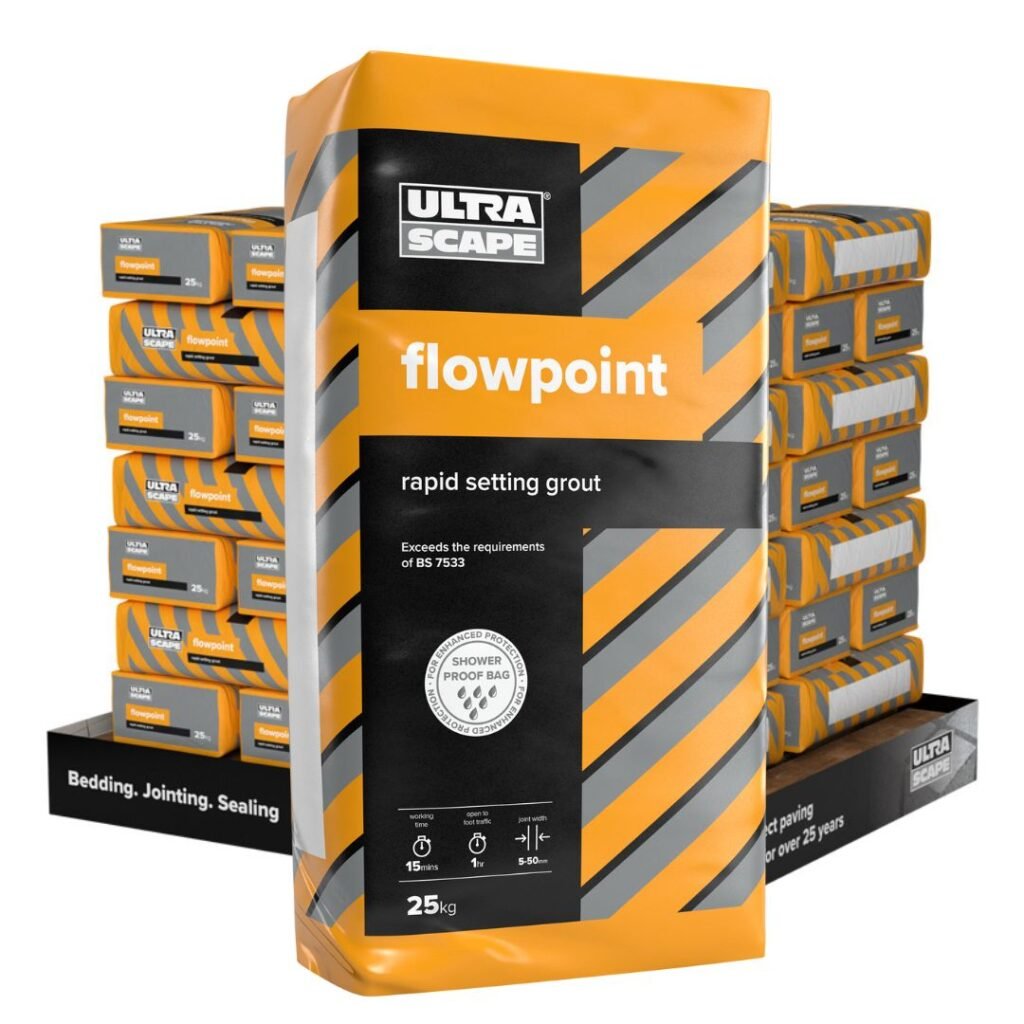
When using slurry grouts such as Ultrascape Flowpoint or Fuga-Pave Flex XP:
- Allow extra time before washing off
- Ensure the product has properly started to set
- With Flowpoint, wait until the grout has stopped “bleeding” from the joints before cleaning
Rushing this stage can weaken joints and affect the final finish.
Recommended Grouts for Colder Temperatures
If you’re working indoors or outdoors during colder months, these grouts are suitable for winter conditions, with a minimum working temperature of 5°C:
Additionally, Premjoint brush-in grout can be used at 3°C and rising, but even then, care must be taken to avoid rapid freezing before the grout has had time to set.
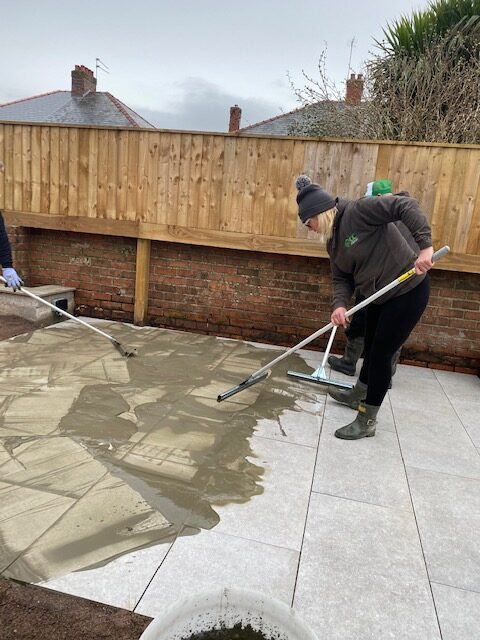
Pointing a Patio in the Rain: When Is It Safe?
British weather doesn’t always cooperate, and rain often appears just as a paving project reaches the finishing stages. Knowing when it’s safe to point a patio in the rain — and when to stop — is crucial.
Whether you can continue pointing in wet weather depends on:
- The type of grout being used
- How heavy the rain is
- The short-term weather forecast
In some cases, light rain can actually help — but heavier showers are a clear sign to postpone the job.
Using Brush-In Grouts in the Rain
When using sand-based, non-cementitious brush-in grouts such as EasyJoint or PremJoint, pointing in the rain is often possible.
In fact, slightly damp conditions can make brush-in grouts easier to work with, helping the compound move smoothly into the joints.
However, there are important limitations:
- Grouting in the rain is only recommended on permeable paving installations
- On permeable beds, excess water drains freely through the sub-base
- On impermeable beds, rainwater can pool in joints and push the grout back out
During heavy rain — especially on non-permeable installations — brush-in grouts can become oversaturated and fail to perform correctly.
Using Slurry Grouts in the Rain
Extra caution is required when using cementitious or slurry grouts, such as:
- Sand and cement mixes
- Ultrascape Flowpoint
- Fuga-Pave Flex CH
A very light shower can actually be beneficial, as most manufacturers recommend lightly damping the area during application.
As such, light rain can:
- Improve workability
- Prevent slurry drying too quickly
- Reduce residue sticking to slab surfaces
However, anything more than a light drizzle is too much.
When Rain Becomes a Problem
Medium to heavy rainfall can:
- Weaken the slurry formula
- Cause cracking or joint failure once dry
- Lead to staining or efflorescence over time
A simple rule applies: If the joints are filling with water, it is far too wet to grout.
In these conditions, postponing the pointing job is always the best option.
How Cold and Wet Weather Affects Cementitious Products
Cement-based products such as tile adhesives and grouts are highly sensitive to temperature and moisture.
During Mixing and Application
- Hydration slows in cold conditions
- Excess water weakens the mix
- Freezing water can damage internal structure
During Curing
- Extended curing times
- Below 5°C, hydration slows dramatically
- At or below 0°C, hydration stops entirely
Long-Term Durability
- Increased risk of freeze-thaw damage
- Cracking and surface scaling
- Reduced lifespan if conditions aren’t controlled
Preparing for Paving and Pointing in Cold or Wet Weather
Good preparation makes all the difference:
- Use frost-resistant tiles and paving
- Choose low-temperature adhesives and grouts
- Start cold-weather pointing later in the day
- Ensure hoses and sponge machines are frost-free
- Store products off the ground and away from damp
- Mix materials thoroughly to generate slight warmth
- Protect work areas with covers or temporary shelters
Which Outdoor Tile Adhesive Should You Use in Cold Conditions?
We stock a wide range of outdoor tile adhesives, paving grouts, bedding mortars, self-levelling compounds, paving primers, and quick-drying screeds, all designed to perform reliably in outdoor environments.
These products help ensure:
- Strong, secure tile bonding
- Durable, long-lasting joints
- Reduced installation times, even in cooler conditions
Can You Lay Porcelain Tiles in Cold Weather?
Yes, porcelain tiles can be laid in cold weather, but extra care is essential. While porcelain itself is frost-resistant, adhesives and grouts still require stable temperatures to cure properly.
Always monitor conditions and ensure temperatures stay above the manufacturer’s minimum requirements for 24–48 hours after installation.

Other Weather Factors to Consider
Cold weather often brings additional challenges:
- Rain and snow can weaken bonds
- Wind lowers surface temperatures and slows curing
- Humidity can affect setting times and cause cracking
Should You Seal Outdoor Tiles in Cold Weather?
Yes — sealing outdoor tiles is highly recommended, particularly in colder or wetter months. A quality sealer protects against moisture ingress and freeze-thaw damage.
Popular options include:
- Nexus ProJoint PRO-410
- UltraTile ProClean Tile & Grout Sealer
Where to Find Cold Weather Paving Supplies
Our priority is making sure you have the right products and advice to complete your project successfully, whatever the weather. Here at The Paving Experts, we offer a full range of cold-weather tile adhesives, grouts, paving products, and tools, along with expert support whenever you need it.
With the right preparation and materials, paving and pointing through colder and wetter conditions can still deliver excellent, long-lasting results.